
ISBN: 978-0684193588
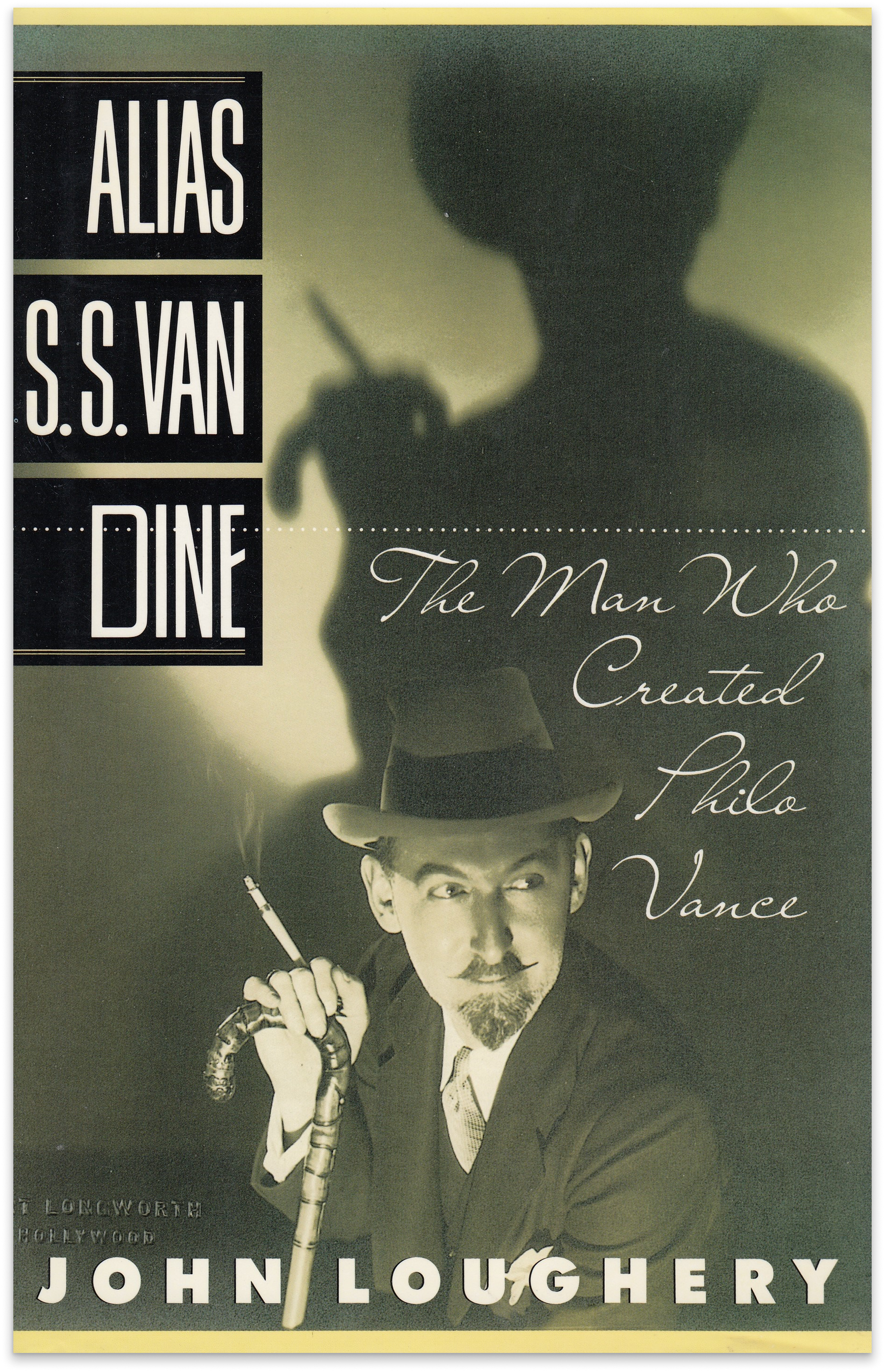
Alias S.S. Van Dine: The Man Who Created Philo Vance
Alias S.S. Van Dine was the first biography of the modernist art critic and literary editor Willard Huntington Wright (1887–1939), an ally of H.L. Mencken and Theodore Dreiser in the culture wars of his time, who transformed American detective fiction in the 1920s with his mystery novels and unusual sleuth Philo Vance.
The Canary Murder Case with William Powell was one of the first “talkies” produced in Hollywood, and his novels were among the best-selling books during the Depression. By the end of the 1930s, however, his fame had run its course as he was surpassed by writers like Dashiell Hammett and Raymond Chandler.
Purchase this Book:
Awards
Edgar Allan Poe Award for Biography, Mystery Writers of America (1993)
Critical Praise
“Mr. Loughery has presented us with a scholarly and absorbing book, so well written that he contrives to turn a thoroughly unpleasant man into something of a tragic hero.”
— John Le Carré
“In Loughery, Wright has found exactly the biographer his story requires… Alias S.S. Van Dine is scrupulous, balanced, discriminating and, in the best sense of the word, sympathetic… Loughery has discharged his obligations as a biographer admirably.”
— Jonathan Yardley, Washington Post Book World
“Wright’s is a life worth knowing about, and in this book his story is tautly written and astutely told.”
— Avis Berman, Philadelphia Inquirer
“Wright was an original, and John Loughery has brought him into full life, a ‘boy wonder’ from the West who for a few brief years transformed the East.”
— Robin Winks, Boston Sunday Globe
“It’s to Mr. Loughery’s credit that he has seen through his subject’s lies and posturing to the real story, and that is an important, compelling one well told.”
— Richard Abshire, Mostly Murder
“Whatever one thinks of the man and his work, Wright’s life has the dramatic form and impetus that make for good reading.”
— The Atlantic